Thank you to the American Adoption Congress for your support and the opportunity to share YOU FOLLOW!
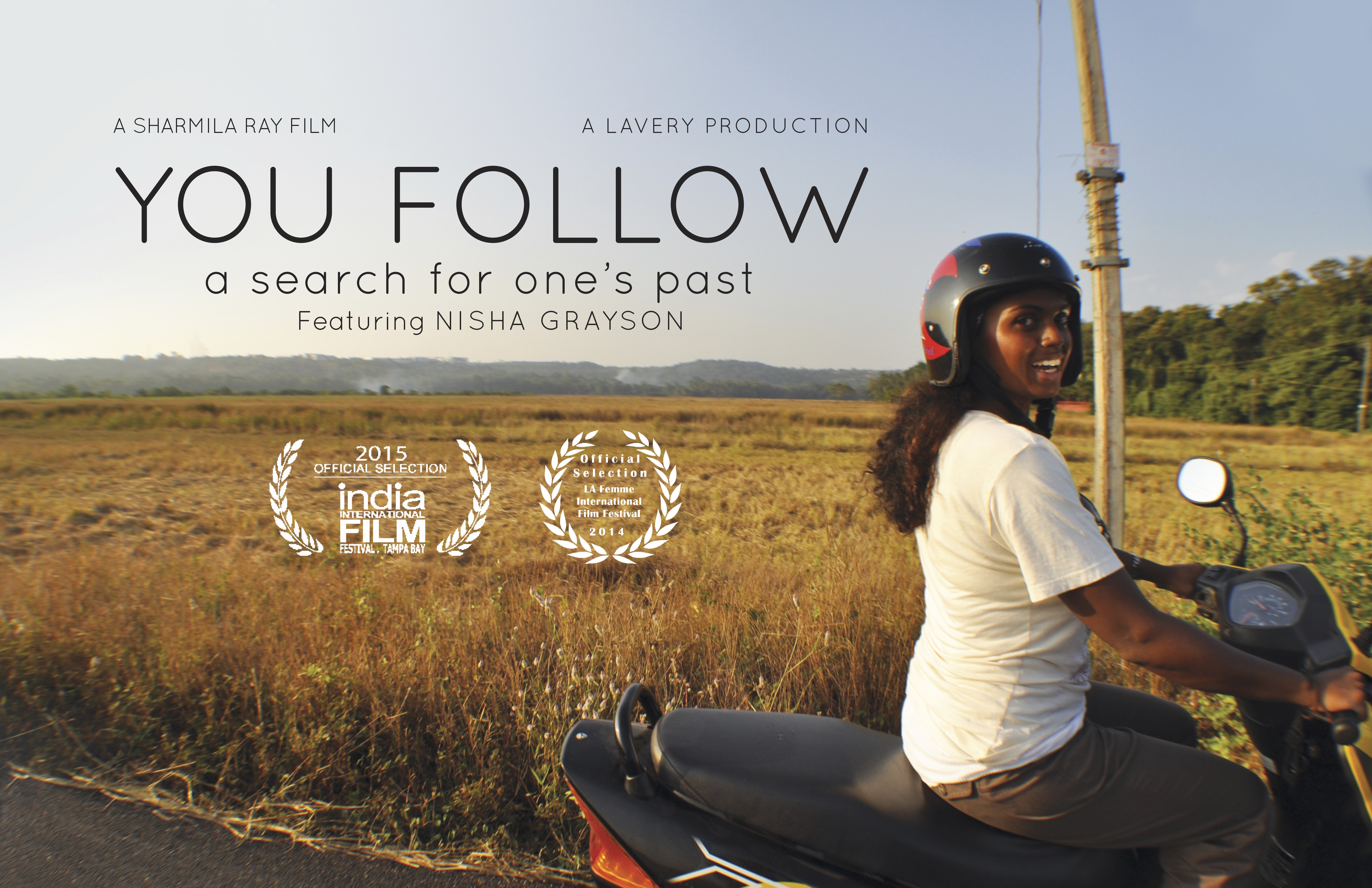
YOU FOLLOW: a search for one’s past
For ticket to the American Adoption Congress Conference
For Individual tickets to the YOU FOLLOW Screening
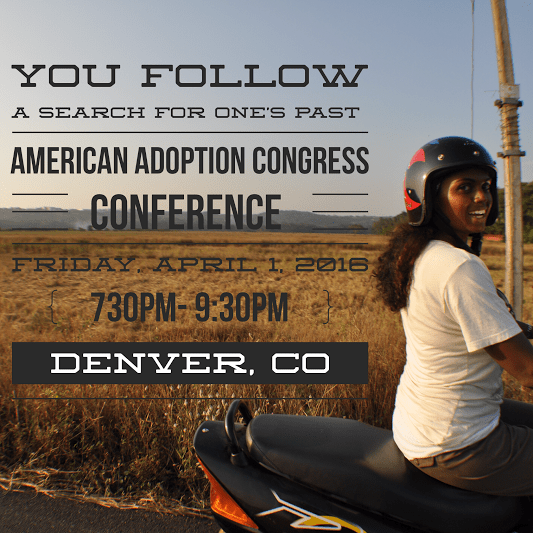
Thank you to the American Adoption Congress for your support and the opportunity to share YOU FOLLOW!
YOU FOLLOW: a search for one’s past
For ticket to the American Adoption Congress Conference
For Individual tickets to the YOU FOLLOW Screening
As an adoptee, there are some privileges that I don’t have. One of them is truth. As I become more involved with my history, my story, my narrative, there is still a little part of me that doubts what I have been told or what I have discovered. There has, and I am sure there will always be gaps and holes in my personal story. I am hoping these gaps are not created intentionally by those that have determined my destiny and path up until now. Although, even as a 30 something adult, I have had to accept the fact there will be truths to my story that I will never be able to uncover due to secrets and reputations held by key players in my adoption. I am not alone here.
Since the release of my film, YOU FOLLOW: a search for one’s past, I have connected with other trans-racial adoptees via Facebook. Aspects of their adoptions come up every now and then on my feed. Over the last couple of years, there have been a common trend of other adoptees celebrating the date of arrival into their family. This date is the day that their adoption became final, when they got picked up from the airport, when they met their adoptive parents for the first, etc. However their first meeting played out, that is the day that is usually acknowledged and sometimes publicly celebrated.
For me, my date of arrival was never really important to me. I always knew that it was sometime in December. Within my family, there was no acknowledgment or celebration. I never felt the need or desire to mark that date as an anniversary or a special day. At least not until recently.
It was the acknowledgment by my fellow adoptees that got me curious one afternoon in mid December of last year. I got the intense urge to find out because I did want to honor that day of the year.
The first thing I did was call my mother. No answer. Then I called my father. No answer, so I left a message. He took a couple of days to call me back. He stated that he looked through all the paperwork that he had but my day of arrival was not mentioned anywhere. He casually suggested that I look at my Indian passport.
At that moment, a loud DUH! went through my thoughts. I happened to be sitting at my desk and my handy plastic container with all my important documents was conveniently placed next to my chair by surprise. With my dad still on the phone, I lifted the lid off and my Indian passport was on top of everything else. I opened up the pages and found the stamp from the Bombay Airport Immigration dated December 29, 1983. I flipped the page and the same date appeared on the US Immigration stamp. There it was, the date that I left my first home and arrived to my next one.

I told my dad that today is my anniversary of when I first arrived to the US. He sounded pleased and happy of course, but I on the other hand felt the opposite. I felt sad, very sad. For me to find out my original date of arrival exactly 32 years later on the very same date was already unreal. These feelings of grief came over me. I acted like I was okay and said my goodbyes.
I sat and rode the waves of emotions for awhile. I stopped what I was currently working on at the time. I didn’t answer calls. I just sat with myself.
I cried.
I missed my first home. I missed India. I missed by birth mother. I missed a life that I could of easily had. I missed not having a choice.
Its odd, but I felt I was taken away. Almost against my will.
To think that my life could of unfolded any other way because of someone else’s decision. This someone that I will never meet and who refuses to answer any of my emails. This someone that holds so many secrets to my life so she can protect her own reputation.
Since there are so many uncertain pieces and secrets to the first six months of my life, I must hold on to the pieces that I know to be true. I can now add my date of arrival to my story.
Motherhood hasn’t always been something I looked forward to. I mean, I do want to be a mother and I am confident that I will raise an intelligent, brave, and spiritual gifted human being, but that desire and confidence has developed in the last five years or so.
Now looking back, motherhood has always been a part of my life. I was longing for the presence of my birth mother while loving my mother who is present everyday. Does this feeling of craving my birth mother transcend beyond human beings? Of course, how could animals, insects, and mammals not have an emotional connection to their mothers? It was so obvious; I made the connection!
Since choosing a vegan lifestyle a few years ago, my energetic pull to the Universe has helped me open my heart and soul to another identical form of motherhood; motherhood that takes place in the farm industry, but is so often hindered because of the selfish desire to consume meat and dairy.
The sole purpose of a female cow on a diary farm is to be constantly raped and to give birth. To hear a mother scream and cry for her baby that is suddenly stolen from her only hours after giving birth to simply produce milk for the dairy industry is heart wrenching. The pain and yearning that that mother goes through are feelings that I cannot imagine going through myself, so why direct the feelings onto another helpless being?
The milk that the mother spends nine months producing inside of her is never given to her calf, instead its bottled up and sent to the store for human consumption. NO being should experience that pain and grief after having their child stolen for the sake of creating milk, cheese, and yogurt. These products come from grieving mothers.
Since I can relate to that pain and longing for my birth mother, I knew that I can never cause another being to feel that same grief and pining by financially supporting the dairy industry.
The story of Rita, a pregnant pig with 10 piglets, was smashed in a truck bound for the slaughterhouse. She was expected to die, but her mother instincts told her to escape. Rita jumped from a moving truck and was saved!! She was dropped of at Animal Place Sanctuary where she gave birth in a safe and clean space with nothing but love floating around in the air. Rita represents motherhood with the love for her children, the bravery to escape, and the fight for their lives.
Recognizing and having empathy for the bond between a mother and child is connected to my loss for my natural mother. I know the feeling of loss and separation, so I have chosen not to contribute to putting other animals, beings, mothers, and children through the same experience by choosing a vegan lifestyle.
We are all equal, with a heart, emotions, and the ability to nurture relationships with others. Farm animals deserve to take care of their children.
#FamilyPreservation
I contributed these words to a dear friend, writer, a role model. Submitted 9/27/2014
When I first got the idea to seek out other adoptees and support, I had just returned from my first trip back to my country of origin, India in 2009. I had spent two months in India searching for my birth mother and when I came back, I had a lot of emotions, thoughts, fears, insecurities, uncertainties that I needed to process. I was in search for people who I could have a conversation with that could give. I was already surrounded by people who listened, but had nothing to contribute, and that was what I was in desperate need for at that time.
Yes, I wanted to always know other adult adoptees. The desire to know other adoptees felt like just another fantasy. I was never really motivated to search out others or support prior to 2009. I always felt I was fine and that I would get over it soon. Ha, well that didn’t last long at all.
I have four cousins that are also adopted, but I would rarely see them because they are all older and we don’t live close to each other at all. We would only see each other at major family events and those would only last a short period of time so our conversations never went to that level.
Being adopted was confusing growing up. What I mean is that all I heard were the great things about adoption, “you are so lucky,”” this is your only family,” “love is all that matters,” and “your life is so much better now.” While hearing all this shit, I was feeling just the opposite. I felt lonely, sad, disconnected, empty, broken, isolated, and hurt. Something just didn’t add up for me. I remember crying to my best friend in college about how I hated being adopted. She had nothing to say, and that’s when it clicked for me… she doesn’t get it. Nobody gets it.
Oh my goodness, I love my adopted peeps! I feel such relief that it’s literally indescribable. A few words explain a lifetime of experiences. A few words validate a lifetime of feelings. A few words provide a safety net for personal expression. A few words create healing dialogue. A few words spark a commonality that doesn’t need words. My relationships with other adoptees have been made possible by adoption organizations like PACER and Pact an Adoption Alliance. Through the sharing of my film, I have also created some friendships with other adoptees via social media, but there is nothing like meeting and talking in person.
I am a part of the transracial adult adoptee subgroup. My relationships with other transracial adult adoptees stem from Pact an Adoption Alliance.
I am not in physical contact with other adult adoptees on an everyday basis. There are PACER meeting that I enjoy attending when I am not in school. I connect with my transracial “tribe” via social media, emails, text messages whenever possible and I reach out whenever I am in their neighborhood. I mostly send out an email or text message to friends that I think about in the moment. I am interested and trying to plan an adult adoptee dinner/gathering every couple of months or so just to stay in contact and develop friendships/bonds.
Discussing my experience is quite difficult. Growing up, my parents, family, or friends never really brought it up and if they did then it wasn’t really an authentic conversation. I never felt safe to discuss my adoption with my family because for some reason, my feelings would be mistaken as an attack which would cause family members to get defensive; I would immediately withdrawal. At this point, now that I have my adult adoptee tribes, I don’t really feel compelled to share too much with those that are non-adoptive, unless they ask of course, then I will be more than willing to share how I feel about my story.
The first time I was with a group of adoptees was when I attended a PACER meeting back in 2009. It was a triad group and it felt great to not only be around other adoptees, but also birth mothers. The women that I met made my birth mother real for me. Their presence pulled my birth mother out of my fantasies and made her real, with a story, with feelings, with heartache, with grief, sadness, shame, pain, and anger. The truth that those women spoke helped me realize that I was never abandoned or given up.
My first raw experience of being with other adoptees was when I first pulled up to the Pact Family Camp in July 2014. The first thing that I saw were little black children running across the street to the pool with their white families following. That’s when my heart dropped and I started breathing heavy. I was in absolute awe to see a family built like my very own. I thought I was seriously the only one. After I spent some time alone, getting myself together and prepped for the week, I attended the welcoming presentation that introduced the camp, the facilitators, the counselors, and the weeklong programming. Again I was speechless when seeing all the families gathered together in one large room. When Beth Hall asked for all the adoptees to raise their hand, I began to cry because I was so overwhelmed to see that about 80% of the room raised their hands and they were all adoptees of color. Kids, counselors, staff members, foster care alumni, even parents raised their hands and I immediately felt like I was with my people. That moment was life changing for me, I realized after that week at camp that being connected with other adult adoptees has been the most important, validating, gratifying, peaceful experience that I have ever felt before. The men and women that I have met, and have yet to meet in the future has contributed to my own mental health, physical wellbeing, and emotional stability. I am forever grateful.
Her returned letter read:
Nisha, reading your answers made me cry. Thank you for your honesty. Such a powerful response. I’m overwhelmed myself now!
Meeting new people is always so interesting, uncomfortable and invasive or me. Of course most strangers don’t know that I am adopted, but confusion seems to arise when I answer their basic questions about myself and my family. Over the years, I began to notice that I was disclosing my adoption within the first few minutes of meeting someone, only to relieve their confusion about my answers and not for my own personal desire to want to share. There have been times where I chose to leave the conversation when they get that blank stare on their face just to avoid having to tell them the missing link in my story line. In those moments, I have to decide if my adoption is going to be part of my identity or a part of me that is really no ones fucking business.
A brief conversation I had with a kind woman at my weekly mediation group proves my point. Note: personal thoughts are told in parenthesis
Her: Hello, how are you? You are awfully quiet.
Me: Yes (well, we did just get done with a 40 minute meditation session)
Her: Is this your first time here?
Me: No, I began coming last fall, but had to stop due to my school schedule. I am now able to return because my Thursday evenings are now open.
Her: Great, what are you studying?
The conversation was lead to discussing my masters program and blah, blah, blah. Then it begins.
Her: Are you from Fiji?
Me: No, I am from India.
Her: Do you speak Indian?
Me: Do you mean Hindi? (For reals? You look to be at least 80 years old and you still think Indians speak Indian?)
Her: Oh yes, do you speak Hindi?
Me: No, I do not.
Her: Do your parents speak Hindi? (Oh shit, here we go)
Me: No, they only speak English
Her: Its amazing how families come over and lose their language, their culture, their heritage and everything that comes with being Indian. (Oh gawd, you’re right. It’s amazing and it kind of sucks)
This is when I tense up and get a reality check about my losses. I quickly analyze the situation before my next move. I seem to go through the same questions before responding. Do I feel safe? Do I want to disclose my adoption to this stranger? Who the fuck is she? Is she on a need to know basis? Is this a learning opportunity for her? Why do I feel like this? How do I get out of this? Should I just avoid her and nod my head in agreement? What do I do?
With a sunken feeling of sadness and shame, I chose to answer with some honesty.
Me: Well, that comes with adoption. I experienced all of those losses with being a trans-racial adoptee. (There it goes, I dropped the most personal bomb)
Her: Oohh, a trans-racial adoptee?
Me: Yes, I was adopted by a white family.
Her: Oh, interesting.
She begins to tell about a family friend’s child (8 years old) and his recent awareness that his skin is darker than his mothers due to his estranged father being black. I think this is something that is not very common in her social groups, but I respect her for trying to relate. I followed her story about the importance of having dialogue around racial identity during a child’s development and that its usually due to white privilege that white parents are not having these conversations with their children of color. I blatantly said that its doing a disservice to children and during their early years of development.
So, going back to my original point… this was the first time I met this woman and I felt obligated, pressured, and stuck to go deeper with a stranger than I ever intended to just to straighten out her assumptions. Yes, I didn’t have to, and yes, I could of politely excused myself from the conversation, which I have done before. My point is that this is not the first “casual” meet and greet conversation I have had that lead to me telling more than I want. Some other triggers that take the conversation to a deeper level of intimacy is when I get asked if my parents cook Indian food, if I have family/relatives in India, or if they are surprised that I don’t have an Indian accent. I can usually avoid saying too much and I have figured a way to dodge my adoption story, but it’s rare.
I guess this shit is what comes with being adopted. I’m just glad she didn’t mention how lucky I am because then I probably would have lost my shit which is not ideal after meditating. 🙂
 If you are in the New York area on July 14th, then please join me in watching my film about my search for my birth mother in Goa, India. After the screening, I will be available to answer any questions about from the audience.
To watch the trailer and learn more about YOU FOLLOW: a search for one’s past, please visit youfollowthefilm.com
To purchase tickets to the New York screening, please visit wearegazillionstrong.org
Gazillion Trailer from sharmila ray on Vimeo.
For more updates, find us on
This year for my 32nd birthday, I wanted to be in a place that was unfamiliar. The joy of traveling to somewhere new was pulling at me for some time, but due to my work and school schedule I could not get away. I waited patiently and developed a plan.
I decided to pack up my whole studio apartment and stuff it all into a storage unit so I could become a nomad and to celebrate and visit family and friends all summer long. I am not sure if it was the best and most responsible choice, but I needed to take a risk and live.
My best friend, Marissa also has a birthday in June and so we decided to head to San Juan, Puerto Rico and the Republica Dominicana to celebrate for two weeks.
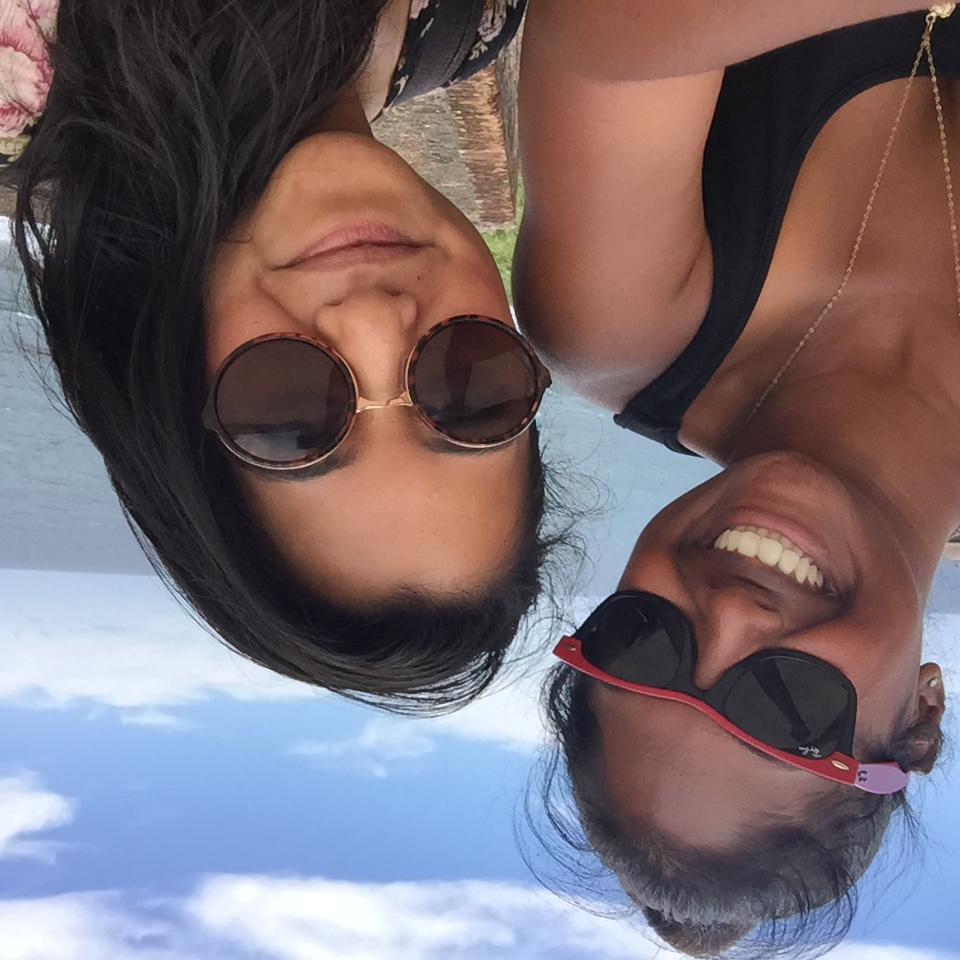
On June 11th, we set out to explore Old San Juan. We walked, talked and drank the whole afternoon. As we walked around with no agenda in mind, I noticed a large white church in the middle of the bustling city streets. We walked up the stairs and I sat in the back on a brown bench. I proceeded to give thanks for the opportunity to travel as well as many others gifts.
As I do every year, I say a little prayer for my birth mother. I send out so much love to her that in the back of my mind, I imagine her feeling the same energy and love pulsing through her core at the same time. I never missed her so much until that day. She stayed on my mind and in my heart the whole day. Even though I will probably never see her again, I just hope that she feels me and my love for her.
Throughout the day, many feelings of loss rolled through me. Being that I was in a dominate Spanish speaking country, I couldn’t help but think about language. It wasn’t until that moment, that I really understood the loss of language through adoption. That feeling took me back to the time that I got to meet my birth mother, but was unable to converse with her privately because she did not speak English and nor did I speak Konkani. To just have a few minutes alone her was all I have ever wanted.
Those feelings of language drifted into feelings about reunion. Although, I was able to meet a woman whom I believe is my mother, I will never be reunited and actually have a relationship with her like so many of my fellow adoptees in reunion. Although, I am happy for my friends, I am also very jealous since international adoption creates a larger barrier for me to know my birth family.
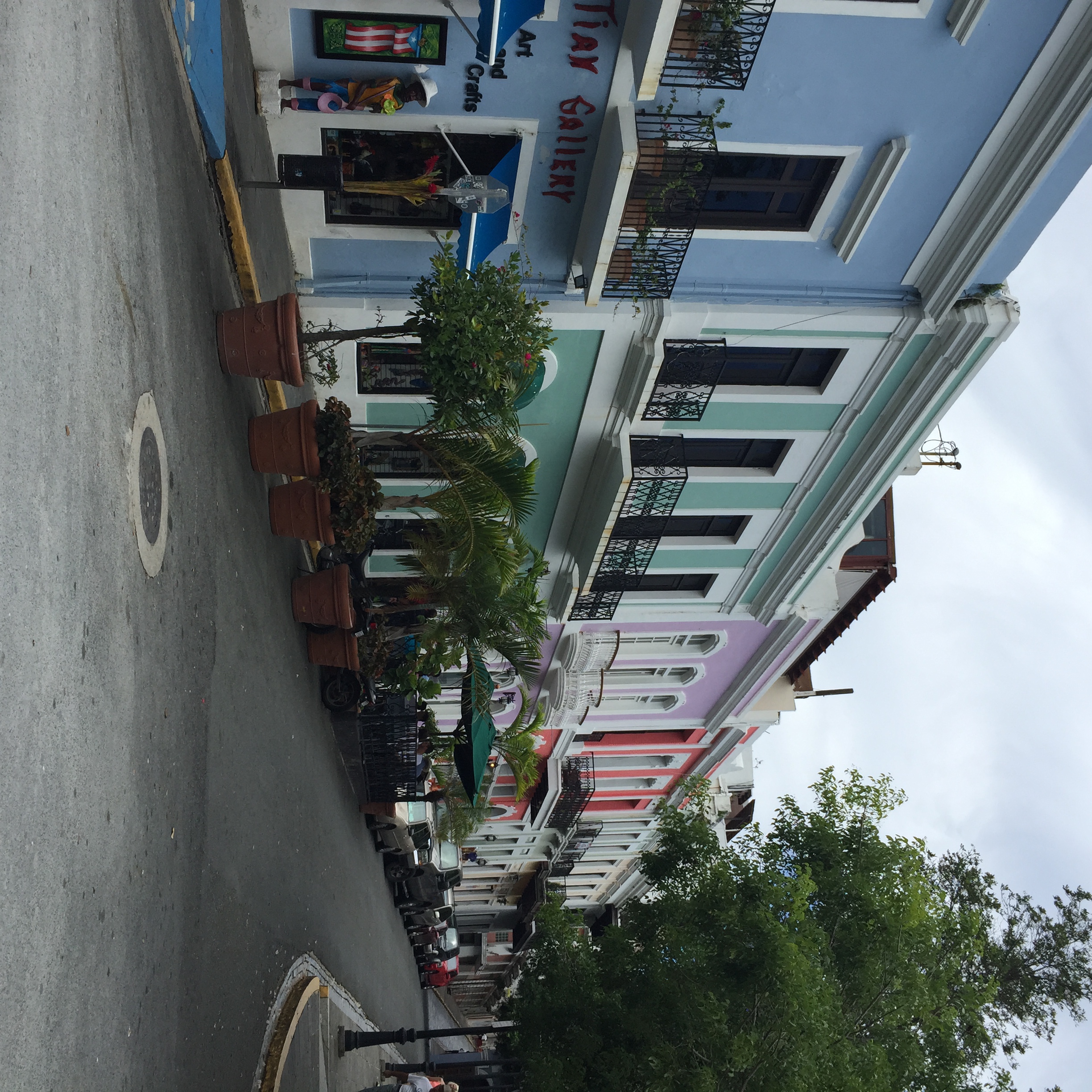
Once these thoughts subsided, I stepped outside and sat on the steps to watch everybody explore. I quickly realized that the architecture in Old San Juan was very similar to Panjim, Goa. Not only the color of the buildings, but the palm trees, tropical feeling, moist humid air, the city’s ordor, the small roads, and the view of the ocean took me back to my trip to my first home. It was a special feeling to be in a place that is so similar to where I came from. It almost felt like I was suppose to be there on my birthday; to have a piece of Goa with me for the day.
After a few days in Puerto Rico, we jumped on a tiny plane and headed towards Republica Dominicana. Our last stop on the island was Punta Cana and as soon as we arrived by bus to our Airbnb apartment, I was reminded that Goa wasn’t too far away.
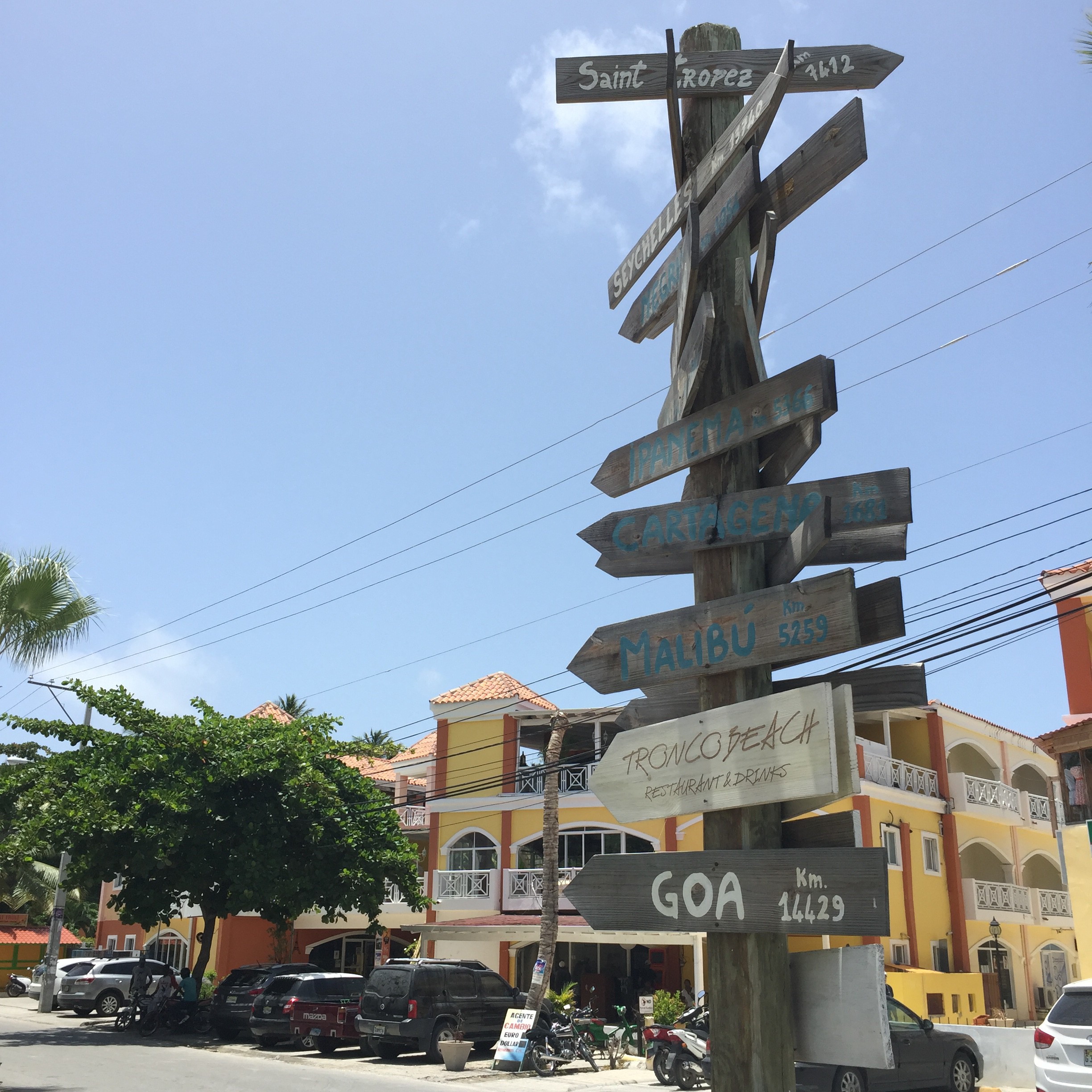
It felt good to be reminded of my first home during this birthday adventure.
I missed India and the possible life that I had no choice in leaving behind
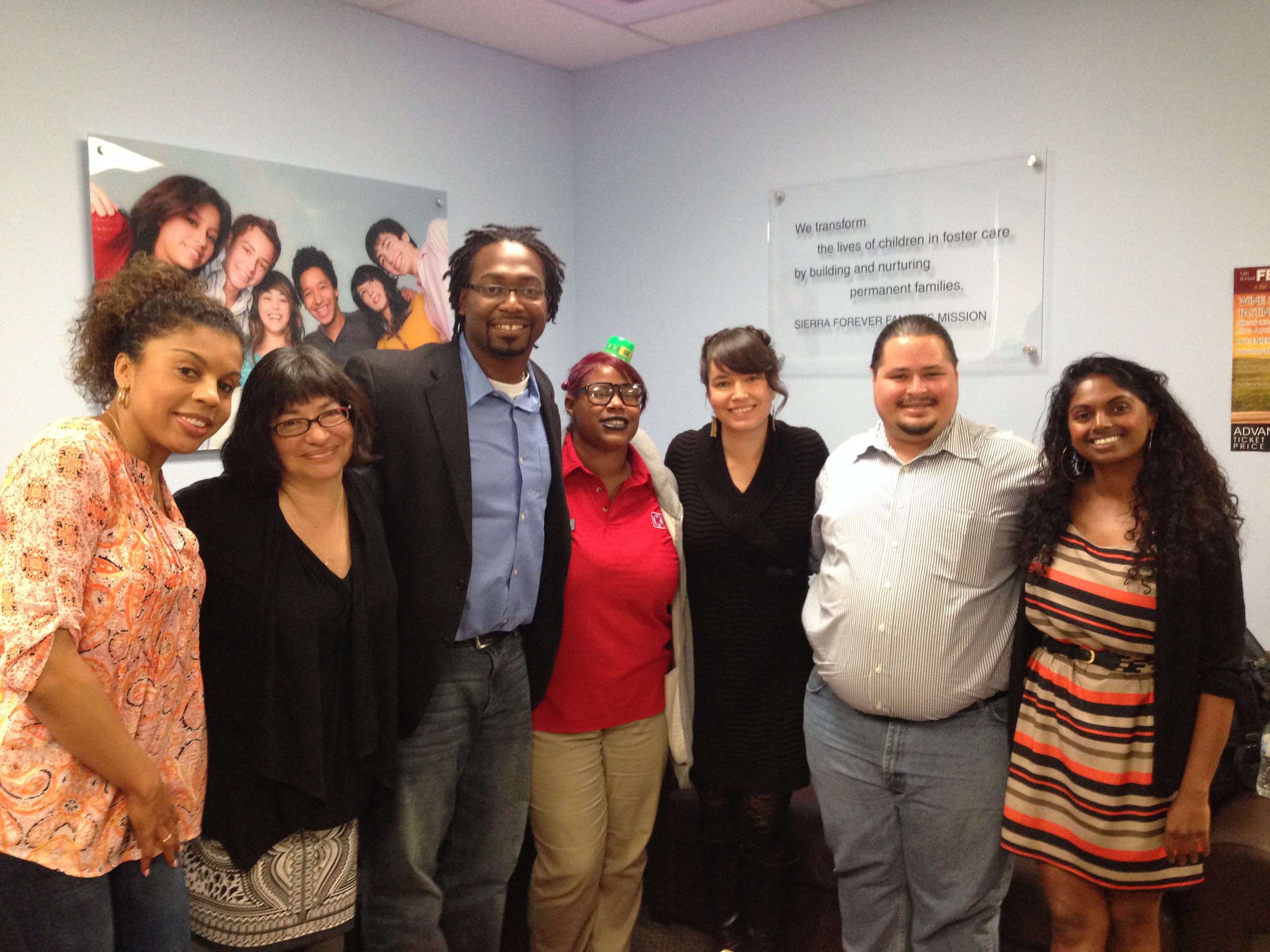
A few weeks ago, I visited Sierra Forever Families to speak to a group of adoptive and foster care parents. A casual thirty minute talk turned into an hour and a half of some good dialogue. I felt comfortable and open with everybody and I got the same feelings reciprocated from my audience. Although I felt like we touched on a lot of big topics and themes, I left feeling drained but also eager to tell the parents more. If only there was enough time to speak on everything I have learned this last year. From what I have collected from Pact Camp, books, films, articles, blogs, PACER, my dear friendships and my TRA Tribe, I could write a “How To…” book, and have many volumes. This is no right or wrong way to adopt a child, but being well informed with compassion and an open mind is very crucial to the emotional, mental, and spiritual upbringing of an adopted child. Here are a few things I thought of as I was driving home…
A few weeks ago I was asked by a friend of mine to participate on a panel for an organization that she works for called Sierra Forever Families. She wanted to create a training for the staff from all three locations that focuses on the perspective of adult adoptees and foster care alumni. At first I was thrilled at this opportunity because I didn’t and still don’t quiet get that my voice is what people want to hear. I am so used to hearing the beautiful side of adoption, not the sad and lonely side of adoption. My experience at the training as a panelist proved that what I had to say not only seemed like something that they haven’t heard but something that they may of needed to hear in order to help the younger generations of adoptees and children in foster care.
Going back to hearing professionals on television and professionals in books, I would hear the word love thrown around like it was a cure all remedy when it comes to adoption and bringing a child into a new family and home.
“Love is all they want”
“Love is all they need”
“Every child deserves to be loved”
I do agree with all of these statements, but it goes much deeper then just love. Love is just not enough.
Unconditional love is what is needed. Unconditional love means that I can act out and not be left alone again. Unconditional love means that I can cry and grieve my first family and not feel ashamed about it. Unconditional love means that I can have both families in my life and heart and I not have to chose. Unconditional love is walking down this emotional path with my family. Unconditional love is a great understanding from all members of the family.
To go even deeper, unconditional love is still not enough.
What would have been enough? I don’t know if there could have ever been enough to take away the pain and fill up the loss.
I do know that awareness that my experiences are different as a woman of color could of helped. Having a support group of other adoptees while growing up would have helped. Talking about my birth mother in a beautiful way would have helped. Being in therapy would have helped. Not hearing assumptions that my birth mother may have been a prostitute would of helped. Being advised on how to deal with racism would have helped. Being told how to be proud of my dark brown skin would of helped.
With that said, Love Is Not Enough
 The Adoptee Diary